Paleo Food List part 2
Ok, we’ve covered a list of foods that can be considered “paleo”, or along the lines of what paleolithic man ate.
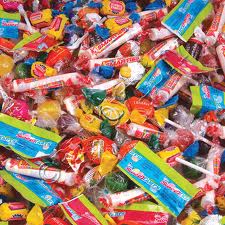
Now, we can move on to a much longer list- what foods are NOT paleo? To list everything would be like writing a book, and much of it is pretty obvious anyway (is there any question whether paleolithic man had access to donuts or cheetos??).
And then there is the breakdown of packaged foods vs. their actual ingredients.
So I’ll stick with the most questionable and relevant foods. What’s not paleo? Here are a few examples. Feel free to chime in with a comment below on what you would add to the non-paleo list!
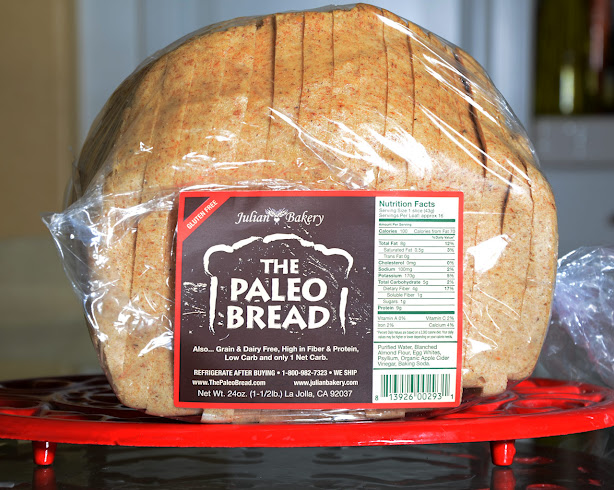
1. Bread
2. Pasta
3. Cereal
4. “Whole Grains” (or any grains)
5. Tortillas
6. Ketchup
7. High Fructose Corn Syrup (or any corn syrup)
8. Rice
9. Soy- including soy sauce and soy protein isolate)
10. Pop Tarts (they probably ate Toaster Strudels ;))
11. Pancakes
12. Protein shakes
Put down in the comments below what your favorite (or least favorite) non-paleo foods, and ask a question if you aren’t sure!
Sign Up here and receive:
“The Three Pillars of Achieving Your Perfect Weight Through the Mind-Body Connection” Audio
Paleo Food List
Eating “paleo” seems to be getting really popular these days. The Paleo Diet is basically the idea of eating more like our primitive ancestors as much as possible, as opposed to eating the traditional western diet of today.
If you listen to our recent interview with Robb Wolf, you will see that there is a lot to the paleo way of eating, and what is now being called the “paleo lifestyle”!
What can get confusing is, what is paleo and what is not paleo? I thought it would be helpful to come up with a paleo food list. Feel free to comment and add anything else you might consider paleo!
1. Meat- (beef, chicken, pork, game)
2. Fish- wild caught salmon is one of the healthiest
3. Eggs
4. Vegetables- stick mostly with the greens.
5. Fruits
6. Dark Chocolate- go for the higher cacao percentages, eat in moderation
7. Guacamole
8. Coconut/coconut oil/coconut milk
9. Coffee
10. Tea
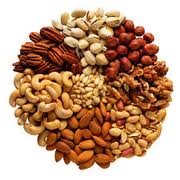
11. Nuts (except for PEAnuts!)
12. Seeds
The paleo foods list is easy to create.
The non-paleo foods list is a lot harder! I’m going to work on that one, but if you can comment below with additions to the above list and questions about other foods, it would help a lot!
Sign Up here and receive:
“The Three Pillars of Achieving Your Perfect Weight Through the Mind-Body Connection” Audio
The China Study bites the dust
Before undertaking our first Healthy Mind Fit Body podcast, I went to the bookstore to familiarize myself with all the latest trendy diets, and for any that I didn’t understand, I did research on Google to find out more.
Several books that I checked out were recommending a vegan diet, and a few of them referenced the China Study (by T. Collin Campbell) as proof that we all should be eating vegan. One book I read by Dr. Joel Fuhrman called “Eat to Live”, gave what appeared to be a credible review of the study, and Fuhrman used it as the basis to the recommendations in his book.
(I incidentally at that time also had someone email me and tell me I was killing myself with meat and that I should read the China Study to find out how I should be eating!)
So I googled it. I came across a few sites praising the China Study as the gospel truth, not to be questioned and a revolutionary study in nutrition. But the most well researched site I came across was this one: http://www.beyondveg.com/billings-t/comp-anat/comp-anat-8e.shtml
This page correctly points out that:
-Level of aggregation of the study data yields, at most, 65 observations (data points) for analysis. This was enough for me to throw out the whole thing, but there’s much more!
-The China Study report lists only 6 statistically significant correlations between meat-eating and disease mortality. Further, 4 of the correlations are negative. The tiny numbers are alarming, or rather, embarrassing to the author’s conclusion.
And then there are these logical fallacies:
-Lack of actual income data for the survey participants is a serious flaw. It makes adjustment of the data for the effect of income less reliable
-Attempts to use the China Study to prove that all omnivore diets are bad
So after reading this article, I was ready throw out the China Study as anything but an attempt to generate a hypothesis rather than prove one.
But if that weren’t bad enough, there is now a much deeper look at the China Study (by someone who read every page of the actual study, not just Campbell’s book) on this blog by Denise Minger: http://rawfoodsos.com/2010/07/07/the-china-study-fact-or-fallac/
What we find here is:
Point #1: “…when we actually track down the direct correlation between animal protein and cancer, there is no statistically significant positive trend. None. Looking directly at animal protein intake, we have the following correlations with cancers:
Lymphoma: -18
Penis cancer: -16
Rectal cancer: -12
Bladder cancer: -9
Colorectal cancer: -8
Leukemia: -5
Nasopharyngeal: -4
Cervix cancer: -4
Colon cancer: -3
Liver cancer: -3
Oesophageal cancer: +2
Brain cancer: +5
Breast cancer: +12″
No proof of a cancer-meat link here!
Point #2: “But what about plant protein? Since plant protein correlates negatively with plasma cholesterol, does that mean plant protein correlates with lower cancer risk? Let’s take a look at the cancer correlations with “plant protein intake”:
Nasopharyngeal cancer: -40**
Brain cancer: -15
Liver cancer: -14
Penis cancer: -4
Lymphoma: -4
Bladder cancer: -3
Breast cancer: +1
Stomach cancer: +10
Rectal cancer: +12
Cervix cancer: +12
Colon cancer: +13
Leukemia: +15
Oesophageal cancer +18
Colorectal cancer: +19″
More of a link to cancer with plants than animals!!!
Point #3: “In these high-risk areas for liver cancer, total animal food intake has a correlation with liver cancer of… dun dun dun… +1.
That’s it. One. We rarely get a perfect statistical zero in the real world, but this is pretty doggone close to neutral. Broken up into different types of animal food rather than total consumption, we have the following correlations:
* Meat correlates at -7 with liver cancer in high-risk counties
* Fish correlates at +11
* Eggs correlate at -29
* Dairy correlates at -19″
Point #4: “Basically, Campbell’s implication that green vegetables are associated with less cardiovascular disease is misleading. More accurately, certain geographical regions have strong correlations with cardiovascular disease (or lack thereof), and year-round green vegetable consumption is simply an indicator of geography. Since only frequency and not actual quantity of greens seems protective of heart disease and stroke, it’s safe to say that greens probably aren’t the true protective factor.”
More flaws in the author’s conclusions from data gathered.
The great points Denise made in her blog post go on and on, and go to show that my initial inclination to throw out the China Study was the right one.
She goes on to say:
“Why does Campbell indict animal foods in cardiovascular disease (correlation of +1 for animal protein and -11 for fish protein), yet fail to mention that wheat flour has a correlation of +67 with heart attacks and coronary heart disease, and plant protein correlates at +25 with these conditions?
Speaking of wheat, why doesn’t Campbell also note the astronomical correlations wheat flour has with various diseases: +46 with cervix cancer, +54 with hypertensive heart disease, +47 with stroke, +41 with diseases of the blood and blood-forming organs, and the aforementioned +67 with myocardial infarction and coronary heart disease? (None of these correlations appear to be tangled with any risk-heightening variables, either.)”
Bingo. Carbohydrate and grain intake and its affects on health are not even considered!
T. Collin Campbell’s conclusion to his book was that animal products are deleterious to our health, and that we should be eating plant-based foods instead. Unfortunately, he not only did not prove this, but has lead many people to believing in more nonsense that if followed, will have negative consequences on their health in the long term.
Sign Up here and receive:
“The Three Pillars of Achieving Your Perfect Weight Through the Mind-Body Connection” Audio
Priorities in weight loss
When it comes to losing weight, whether we are talking a few pounds or 100, it is important to keep priorities in mind.
After interviewing Robb Wolf today on our podcast, who is a wealth of knowledge on nutrition and biochemistry, I can see how easy it is to get bogged down in the nitty-gritty! Differences between sweet potatoes and yams? Which type of nuts are the absolute best? Should I buy organic?
This stuff can go on and on. If you’re coming from a traditional high carb, low fat diet, start with focusing on the basics: eat lots of vegetables, wild caught salmon, grass fed beef, eggs, fruit, some nuts, coconut oil, and cut out or cut way down on bread, pasta, cereal, and grains in general.
Is the other stuff important? Sure! But to get hung up on the nuances would be like spending weeks looking for a personal trainer, when all you need to do is start walking 20 minutes a day!
Sign Up here and receive:
“The Three Pillars of Achieving Your Perfect Weight Through the Mind-Body Connection” Audio
Low Carb Lunch
I wrote about breakfast a few posts ago, but what about lunch?
How can you eat a healthy, low carb lunch, when many of us are so used to the traditional sandwich, where there’s more bread than anything else!
When I first started cutting my carbs, for lunch I usually just took off one slice of bread- so I ate my sandwiches “tostada style”- putting the meat and cheese on the bread instead of between two slices. This cutting out of 20g of carbohydrates every day did wonders for my energy levels in the afternoon, as well as for flattening out my stomach!
Still, I’ve come to the realization more recently that grains are not healthy- so why do I still eat them, even in small quantities?
I’ve switched my lunches to something like this:
About a cup of frozen broccoli, thawed in the microwave
Sprinkle olive oil and sea salt on the broccoli
Add a tablespoon or 2 of guacamole
Add sliced turkey, roast beef, or turkey
Stir and eat!
You can easily replace the broccoli with artichoke, or your favorite green vegetable.
I’ve also just found out about using broccoli leaves in place of bread! I haven’t figured out where to get broccoli leaves, but if anyone knows, please comment here, I’d love to try this!
For dessert, I’ll have an apple with almond butter or an apple with some cashews.
This lunch keeps me full throughout the afternoon with no crash!
Sign Up here and receive:
“The Three Pillars of Achieving Your Perfect Weight Through the Mind-Body Connection” Audio